Does thicker transparent tape really stick better than thinner tape?
Thicker transparent tape isn't necessarily more adhesive than thinner tape. The adhesiveness of transparent tape depends primarily on the adhesive formulation and the amount of adhesive applied, while “thickness” primarily affects tensile strength and tear resistance.
Simply making the base film thicker without increasing the adhesive layer may not necessarily improve initial tack or long-term adhesion. On the contrary, a thin transparent tape with a sufficient adhesive layer and an appropriate formulation often adheres more securely than a thick tape with a thin adhesive layer.
Adhesion depends on the adhesive layer; thickness determines strength
Transparent adhesive tape typically consists of a base film, an adhesive layer, and a release coating. The thicker the base film, the less likely the tape is to tear; the thicker the adhesive layer, the easier it is for the tape to adhere firmly and maintain its bond.
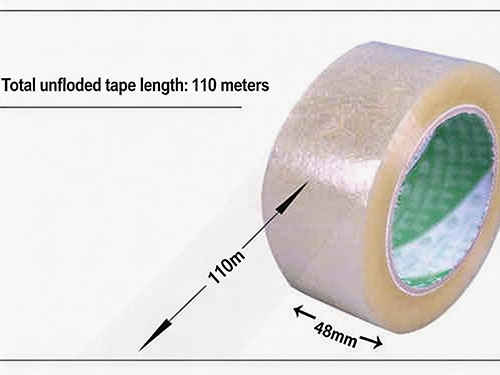
The initial tack of standard BOPP transparent tape typically falls within the range of 6–12 balls, while its holding power depends heavily on the adhesive system, the amount of adhesive applied, and the surface being bonded. For example, given the same total thickness of 50 μm, one tape with 25 μm of adhesive and another with only 22 μm will generally make it easier for the former to adhere to cardboard or plastic surfaces.
Why Does Thick Tape Sometimes Not Stick as Well?
If the adhesive layer on thick tape is too thin, the tape may feel stiff when applied, adhere poorly, and the edges may curl up easily. This issue becomes even more pronounced on surfaces with low temperatures, high dust levels, or low surface energy.
For example, when sealing heavy boxes, thick tape is indeed more tear-resistant, but if the adhesive layer is too thin, the tape may still come off once the fibers on the box surface are pulled up. In such cases, switching to a type with a thicker adhesive layer and higher initial tack often yields better results.
When shopping, don't just look at the total thickness
When purchasing transparent adhesive tape, in addition to the total thickness, be sure to ask about the thickness of the base film and the amount of adhesive applied. For example, a tape labeled as 50 μm could consist of a 28 μm film and 22 μm of adhesive, or a 38 μm film and 12 μm of adhesive; the actual adhesive strength will vary accordingly.
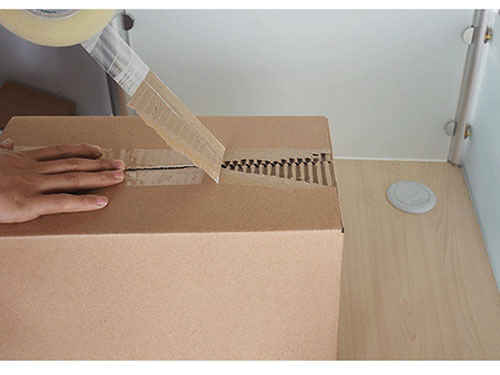
For lightweight boxes and office-use sealing bags, choose 40–45 μm; for e-commerce packages and standard cardboard boxes, 48–55 μm is recommended; for heavy cargo, long-distance shipping, or machine-sealed boxes, choose 55 μm or higher, and ensure the adhesive coating is at least 15–18 μm.
Simple Test: Stick, Pull, Wait, etc.
You can apply the tape to a clean cardboard box, press it down firmly with your finger, and then slowly peel it off to see if it comes off easily. Apply another piece and let it sit for 24 hours to check if the edges curl up or if paper fibers come off when you peel it away.
For bulk purchases, we recommend asking the manufacturer to provide data on initial tack, holding power, and peel strength, and conducting comparative tests on samples first. This approach is more reliable than simply considering thickness and price, and it helps prevent issues such as adhesive failure, curling edges, and rework after the boxes are sealed.
relative product infomation
- Does thicker transparent tape really stick better than thinner tape?
- Why do rolls of transparent tape of the same size have different actual lengths?
- Why does transparent tape tear easily?
- What is the lead time for bulk orders of transparent tape?
- Does transparent tape lose its stickiness if it's left sitting for a long time?