OPP colored tape does indeed fade when used outdoors, but the rate of fading depends primarily on the substrate formulation, the pigment system, and whether a curing agent is present. Standard OPP colored tape is more suitable for indoor use or short-term outdoor signage; when exposed to prolonged sunlight, noticeable color changes may occur within a few weeks to a few months.
Why Do Colors Fade When Exposed to the Elements?
Ultraviolet rays in sunlight can damage the molecular structure of OPP film and pigments, causing the color to fade, yellow, or become brittle. High temperatures, rain, humidity, and temperature fluctuations can also accelerate aging.
OPP (polypropylene) is relatively sensitive to ultraviolet (UV) light. If ordinary adhesive tape is stored outdoors for one month, UV exposure can cause the adhesive strength to decrease by about 50 percent.
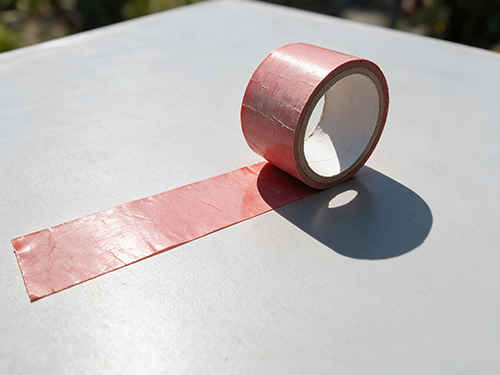
How long does standard colored OPP last outdoors?
Standard OPP colored tape exposed to direct sunlight outdoors typically begins to show noticeable fading, yellowing, or brittleness within 1 to 3 months.
If a curing agent is added to the product, or if it is a weather-resistant OPP tape, its outdoor durability can be significantly improved. Some weather-resistant OPP tapes show no noticeable yellowing even after 300 hours of UV exposure.
There may be variations in color rendering.
Dark-colored tape absorbs more heat, causing its surface temperature to rise more quickly, which may lead to more noticeable aging of the backing and adhesive layers. Although light-colored tape does not fade as noticeably, its pigments are still broken down by ultraviolet rays.
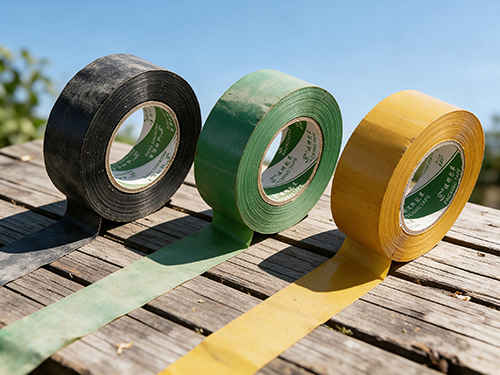
Organic pigments such as red and yellow are generally more susceptible to UV damage than black and white. However, the actual performance depends on the pigment grade and coating formulation; it cannot be determined based on color alone.
Focus on These Specifications When Purchasing
Before using the product outdoors, we recommend verifying the type of substrate, the pigment system, and whether a curing agent is present. Standard indoor colored OPP tape is not recommended for direct, long-term outdoor use.
You may request that the manufacturer provide data from UV resistance, weather resistance, or accelerated aging tests. For example, color difference (ΔE) after xenon lamp aging or UV aging, tensile strength retention, and residual adhesive conditions can all help determine the actual service life.
Simple Tips for Extending the Lifespan of Outdoor Items
Before applying, make sure the surface is dry and free of grease to minimize peeling at the edges and prevent moisture from seeping in. Avoid areas exposed to prolonged direct sunlight, high temperatures, standing water, or frequent friction as much as possible.
Check the condition of the labels regularly, and replace them promptly if you notice fading, peeling, or chalking. In critical areas, consider using outdoor-grade adhesive tape or combining them with signage to prevent information loss.
relative product infomation
- Does the color of OPP colored tape fade, and how long does it retain its color when used outdoors?
- Does ordinary colored tape leave adhesive residue on the surface of an object when it is removed?
- Can you write on BOPP colored tape by hand? Will the writing come off easily?
- Do OPP colored tapes of different colors vary in terms of adhesive strength and tensile strength?
- How do I choose a type of OPP colored tape that is tough and resistant to breaking?