Whether ordinary colored tape leaves adhesive residue when removed depends primarily on the adhesive formulation, the duration of adhesion, the surface material, and the ambient temperature. When applied for a short period to smooth surfaces such as cardboard boxes, glass, or metal, the residue is typically minimal; however, when applied for an extended period to plastic, painted surfaces, rough cardboard boxes, or in environments with high temperatures and humidity, the risk of adhesive residue increases significantly.
Why does adhesive colored tape residue remain after peeling it off?
The adhesive strength of tape comes from the adhesive force and cohesive force of the pressure-sensitive adhesive. When the tape is peeled off, if the adhesive force between the adhesive layer and the substrate is stronger than the cohesive force within the adhesive layer, adhesive molecules may remain on the surface.
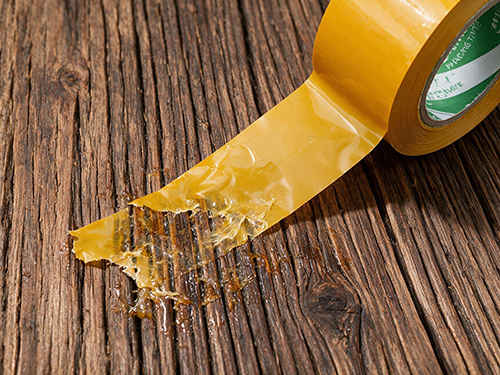
High temperatures, prolonged adhesion, and rapid, forceful removal all increase the likelihood of adhesive residue. Removing the sticker slowly at a 45-degree angle, as recommended, can significantly reduce the risk of residue.
How serious level is the problem with ordinary colored tape, generally speaking?
Standard colored tapes typically consist of a BOPP substrate combined with an acrylic or rubber-based pressure-sensitive adhesive. If the peel strength is between 6 and 10 N/25 mm and the adhesion lasts for at least 24 hours, they generally do not leave significant adhesive residue after short-term use for sealing boxes.
However, if the adhesive layer is too thick, lacks sufficient cohesion, or has been left on plastic, painted surfaces, or cardboard fibers for an extended period, removing it may leave a sticky residue, adhesive strands, or even pull up paper fibers.
Under what circumstances is it more likely for adhesive residue to remain?
The longer the adhesive is left in place, the more likely it is to age, seep through, or harden. Exposure to high temperatures and direct sunlight, as well as humid environments, can also cause the adhesive to soften, making it more likely to leave residue when removed.
Rough, porous, or coated surfaces are also more prone to leaving adhesive residue. For example, cardboard, walls painted with latex paint, and some plastic storage containers often leave more adhesive residue than glass or stainless steel when the adhesive is peeled off.
How to Choose the colored taype Styles That Don't Leave Residue
For short-term labeling and temporary fastening, choose low-tack or removable colored tape; for long-term box sealing, prioritize stable adhesive strength and cohesive strength.
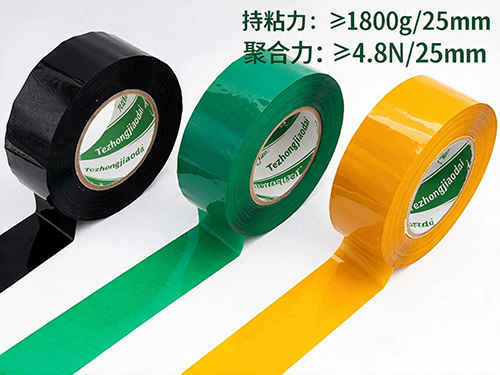
When purchasing, you may request test results for initial tack, holding power, peel strength, and residue. Standard packing tape typically has an initial tack of 12#–16# steel balls, a holding power of ≥24 hours, and a peel strength of 6–10 N/25 mm. If leaving no residue is a priority, you should specify the test surface, application duration, and acceptance criteria.
Tips for Peeling and Cleaning
Before removing the tape, slowly peel it up at a 45-degree angle to avoid pulling it off abruptly. If the tape has deteriorated, you can use a hair dryer on a low heat setting to warm it before peeling it off; this will help prevent the adhesive layer from tearing.
For existing adhesive residue, lightly wipe the area after moistening it with alcohol, menthol oil, or a small amount of adhesive remover. For painted surfaces, leather, and light-colored plastics, test the product first on an inconspicuous area to avoid whitening or discoloration.
relative product infomation
- Does the color of OPP colored tape fade, and how long does it retain its color when used outdoors?
- Does ordinary colored tape leave adhesive residue on the surface of an object when it is removed?
- Can you write on BOPP colored tape by hand? Will the writing come off easily?
- Do OPP colored tapes of different colors vary in terms of adhesive strength and tensile strength?
- How do I choose a type of OPP colored tape that is tough and resistant to breaking?