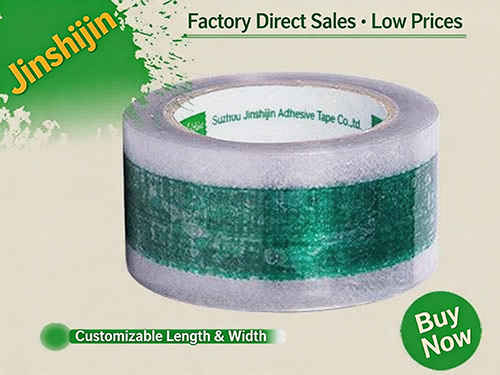
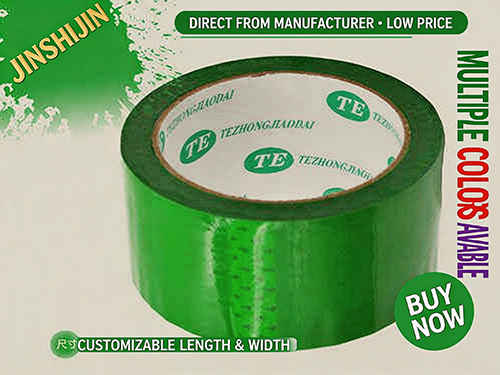
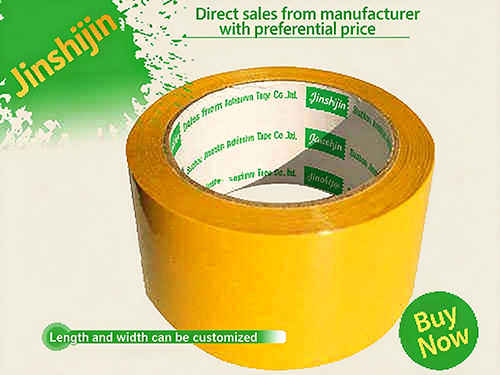
Under normal circumstances, there is typically no significant difference in adhesion between different colors of OPP colored tape from the same manufacturer and the same production batch. The factors that truly affect performance are the base film thickness, adhesive application amount, adhesive formulation, and tensile strength—not the color itself.
However, if the colors come from different batches or formulations, or if darker films contain more pigment, slight variations may occur. When purchasing in bulk, performance should not be judged based on color alone; it is also necessary to review the specifications and sample test results.
Color alone does not directly determine stickiness.
The adhesive strength of OPP colored tape primarily comes from the acrylic adhesive layer, while the color typically comes from a color masterbatch or pigment layer. As long as the adhesive layer formulation and application amount are consistent, the initial tack of colors such as red, blue, yellow, and green should generally be similar.
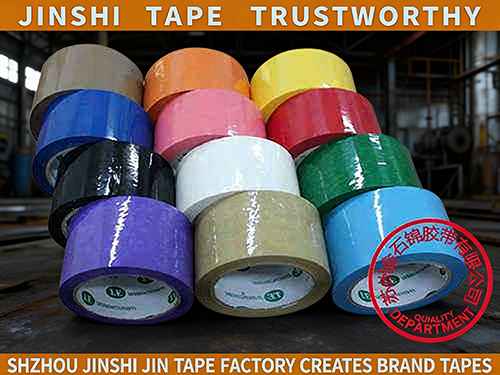
For example, for a batch of 50-micrometer colored OPP tape, if the adhesive coating thickness is uniformly 15–18 micrometers and the master roll of colored tape is relatively soft after drying, the initial tack will typically fall within the range of balls 6–12. If a particular roll exhibits significantly lower tack, this is more likely due to insufficient adhesive coating or uneven application rather than the color itself.
Tensile strength depends primarily on the substrate and film thickness.
Differences in tensile strength are primarily due to the base material’s film thickness, tensile strength, and slitting quality. The tensile strength of standard colored OPP tape typically ranges from 30 to 50 N/cm; if it falls below this range, the tape is more likely to break when pulled rapidly.
If the red version has a film thickness of 48 μm and the blue version is only 42 μm, the blue version will naturally be easier to tear. In this case, the difference stems from the thickness and the base material, not from the fact that “red is stronger than blue.”
Dark films may cause slight fluctuations
Because dark-colored adhesive tape contains a higher amount of pigment, there may be slight variations in the film’s flexibility and light transmittance. Under normal circumstances, this effect is minimal and will not result in an order-of-magnitude difference in adhesion or tensile strength.
However, if the pigment is not properly dispersed or the film thickness of the substrate is not consistently controlled, dark-colored rolls may be more brittle and prone to edge cracking. When purchasing, focus on comparing the tensile properties and edge neatness of dark- and light-colored samples.
Batch differences are more critical than color differences
In actual use, differences most commonly result from variations between batches. For example, for the same green adhesive tape, if the film thickness was 50 μm in last month’s batch but has decreased to 46 μm this month, the tensile strength will decrease.
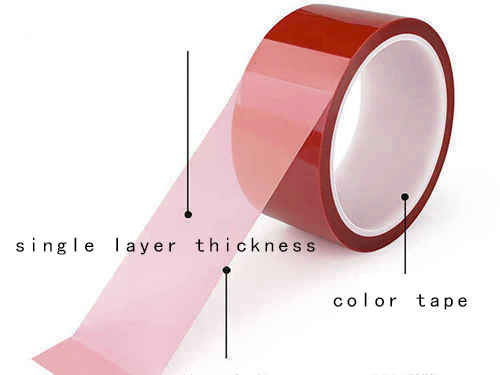
Therefore, one cannot simply assume that “the same color means the same properties.” It is recommended to standardize the width, length, film thickness, adhesive application amount, and adhesive type, and then retain samples for each color to avoid performance fluctuations later on.
Comparing Products This Way Makes for a More Reliable Purchase
You can start by taking samples in different colors and conducting tensile, box-sealing, and 24-hour adhesion tests on each. Observe whether there is any tape breakage, curling, or delamination, and then record any differences in actual texture.
Before placing a bulk order, we recommend asking the manufacturer to provide data on tensile strength, initial tack, holding power, and film thickness. This is more reliable than relying solely on color, and it can help reduce rework caused by tape breaking during box sealing, insufficient adhesion, and batch-to-batch inconsistencies.
relative product infomation
- Does the color of OPP colored tape fade, and how long does it retain its color when used outdoors?
- Does ordinary colored tape leave adhesive residue on the surface of an object when it is removed?
- Can you write on BOPP colored tape by hand? Will the writing come off easily?
- Do OPP colored tapes of different colors vary in terms of adhesive strength and tensile strength?
- How do I choose a type of OPP colored tape that is tough and resistant to breaking?